

Book in a Post: Impro
What improvisational theater teaches us about status, creativity and team dynamics

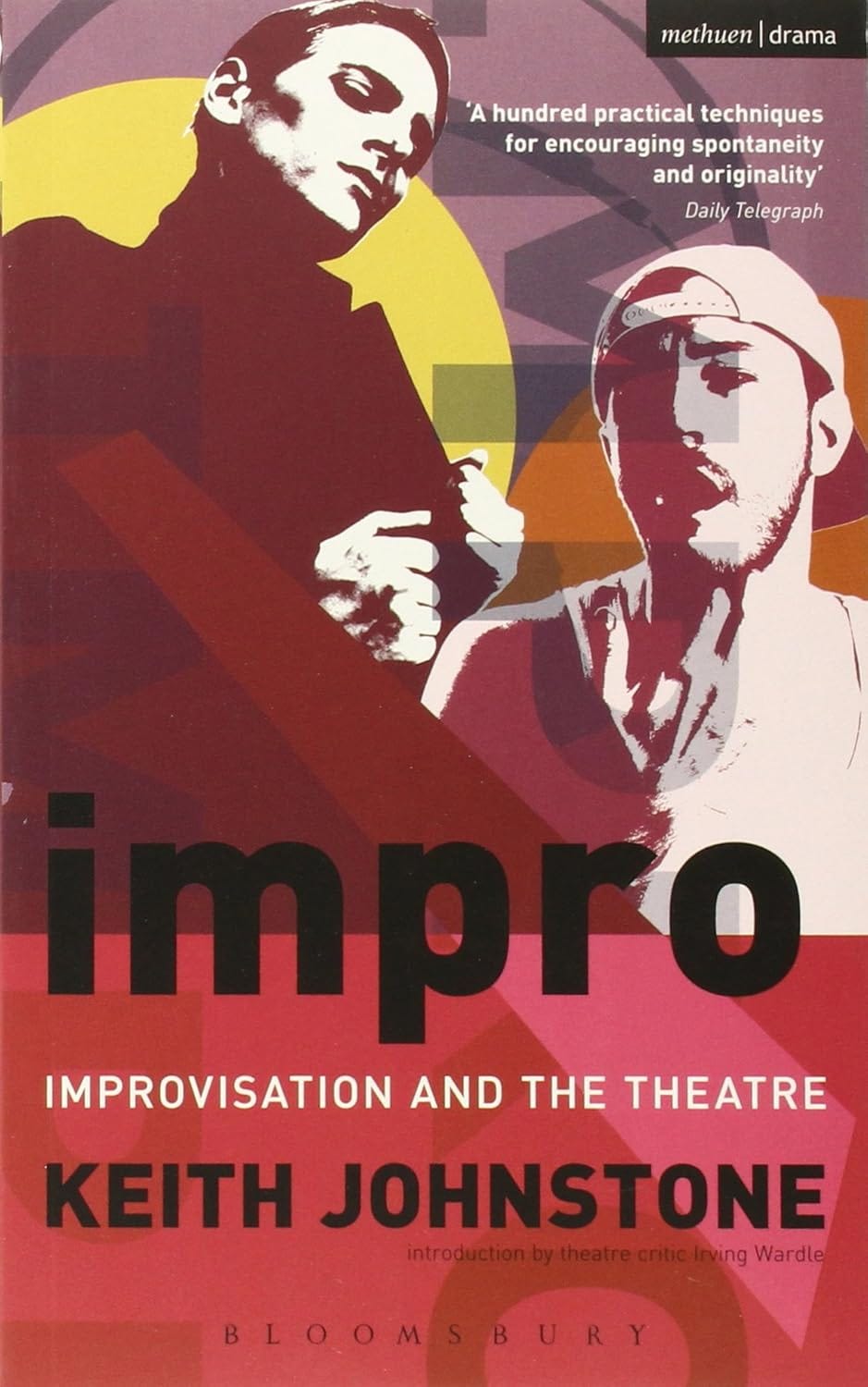
This is the latest in my "Book in a Post" series where I extract the core concepts from influential books so you can get the primary value in under 10 minutes. If the ideas resonate, you'll know it's worth diving deeper into the full text.
Keith Johnstone's "Impro" isn’t a tech book - it’s about improvisational theater - but but it contains some great insights, and in particular the ideas and insights about status dynamics alone make this essential reading for anyone working in teams. It fundamentally gave me a model for understanding how humans work and communicate that I could use to understand a bunch of things that I intuitively did and then get better at them. (In all honesty the rest of the book was interesting and a fun read, but that was where I picked up the value).
The powerful concept here is that every human interaction involves status transactions. In any conversation, people are either raising their status, lowering their status, maintaining it, or playing with it. This isn't usually conscious—it's automatic and constant. High-status behaviors include taking up space, maintaining eye contact, speaking slowly, and making statements. Low-status behaviors include apologizing unnecessarily, avoiding eye contact, speaking quickly, and asking permission. Neither is inherently good or bad, but being unconscious of these dynamics limits your effectiveness.
Johnstone shows how status mismatches create friction in groups. When someone who needs to be heard (like a developer explaining a critical bug) adopts low-status behaviors ("I'm probably wrong, but maybe we should consider..."), their message gets dismissed regardless of its importance. When someone facilitating collaboration (like a project manager) uses high-status behaviors ("You need to fix this immediately"), they shut down the creative problem-solving they're trying to enable. Conscious status awareness allows you to match your status behavior to your goals.
For technical teams, this explains many communication breakdowns. Why do some code reviews feel collaborative while others feel like personal attacks? Status. Why do some developers' architectural suggestions get adopted while others are ignored? Status. Why do some meetings generate great ideas while others stifle creativity? Status dynamics. Understanding these patterns allows you to consciously adjust your approach—using high status when you need to be heard, low status when you want to encourage others to contribute, and status flexibility to build rapport.
So far, so good meh-ok-that-kinda-makes-some-sense-not-sure-I-see-huge-exciting-value-here. But Johnstone goes pretty deep on this - fundamentally unpacking for actors (and any readers!) how to exactly cover and balance status levels both relative to other people in a group simultaneously, but also against the space itself - and goes into a lot more nuance than the simplisitic examples I give above on both relative status levels and the reactions and responses that people give dependent on both the relative differences in status level and the magnitude of those differences.
In addition to the main value I got above, the book also explores how creativity emerges from a combination of structure and freedom. Improv actors work within constraints (scene requirements, character relationships) that actually enable rather than limit creativity. Johnstone shows how too much freedom paralyzes creative thinking, while appropriate constraints channel it productively. I think there’s some interesting stuff here around “getting creative juices flowing” but I’ve not personally experimented with translating into a software context.
I'd recommend this book for anyone who wants to understand group dynamics at a deeper level, particularly technical leads, architects, and anyone who runs meetings or facilitates collaboration. Johnstone writes entertainingly, using examples from theater that illuminate universal human patterns. I wouldn’t make it a “must read”, but I found it very useful - while you might not care about acting techniques, the insights about status, creativity, and human interaction will change how you see every professional interaction. It's the rare book that provides both psychological insight and practical tools for more effective communication.